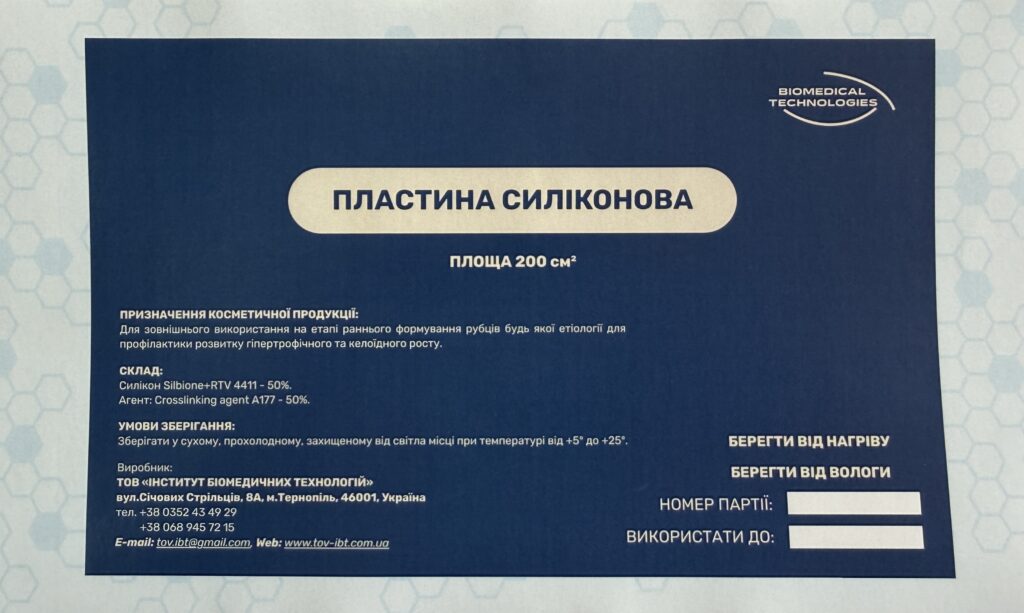
According to clinicians worldwide, silicone plate therapy is the most effective non-invasive method for the prevention and treatment of excessive and pathological scarring. Waterproof yet permeable to air due to the specific structure of the material, flexible and easily adapted to uneven, irregular surfaces, silicone plates have become the method of choice for many specialists owing to their combination of high efficacy, ease of use, and patient safety. Silicone plates are well tolerated by patients, have no side effects, and skin irritation occurs very rarely. The method does not require constant monitoring by medical staff and can be used by patients at home with a standard follow-up interval. Medical institutions in Ukraine use domestically manufactured silicone plates (IBT LLC, Ternopil) for the prevention and treatment of scars.
Specifications
Silicone plates made of certified medical-grade silicone, in sizes 100, 200 and 400 cm²
Instructions
Indications:
- epithelialised burn, scalp and surgical wounds (4–5 days after complete epithelialisation or suture removal)
- hypertrophic and keloid scars of any aetiology in the early stages of formation
Contraindications:
- skin conditions involving disruption of the integrity of the epidermal layer (cracks, scratches, macerations, erosions, etc.)
- open wounds
Usage Recommendations:
The silicone plate should be worn 24 hours a day, except during hygiene care. Open and remove the packaging and take out the silicone plate. Apply the plate to the selected area with either side facing down. The plate must fully cover the post-burn or post-operative surface or scar area and extend 0.5–1.0 cm beyond its borders on all sides. Secure the plate with an elastic bandage, adhesive tape, or compression garment. The silicone plate should be removed once or twice a day, washed in clean warm water or (if heavily soiled) in a solution of baby soap, and dried. The application site should also be washed and dried. When applying creams to the problem area, place the plate only after they have been fully absorbed.
For better skin “acclimatisation”, begin wearing the silicone plates gradually: for 8 hours on the first day, then increase the wearing time by two hours per day until reaching the optimal 24-hour use. The average treatment period is 2 to 4 months. (The duration of use is adjusted individually during consultations with a doctor).
Storage conditions
Silicone plates must be stored in a dry place (at a temperature between +5 °C and +25 °C).
Clinical results
The effectiveness of silicone plate therapy is evaluated according to the following parameters:
- change in scar colour
- softening of the scar
- reduction in scar volume and size
Mechanism of action
The primary mechanism of action of silicone plates on scars consists in retaining water molecules within the connective tissue of the scar, which reduces its density and alters the surface tension energy, leading to the arrangement of collagen fibres parallel to the skin surface (as in healthy areas). These changes prevent the growth of pathological scar tissue when applied at an early stage, and contribute both to a reduction in scar size and to an improvement in its elasticity during the formation stages. Scientific research has confirmed the permanent nature of the changes in scars under the influence of silicone, which ensures the prevention of recurrence.